In My Harvest Era Retro Wavy SVG
First Impressions: Warm, Nostalgic, and Just Right for Handmade Charm
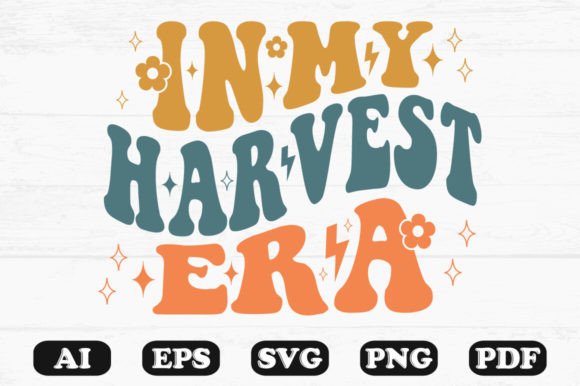
Opening In My Harvest Era Retro Wavy SVG feels like flipping through a well-loved vintage recipe card—soft curves, gentle rhythm, and that unmistakable autumnal ease. It’s not loud or aggressive; it leans into quiet confidence with its flowing baseline, slightly uneven letterforms, and subtle weight shifts. As an embroidery designer who’s stitched hundreds of text-based designs, I immediately recognized its sweet spot: it’s built for warmth, not wow-factor. This isn’t a design shouting from a festival tee—it’s the quiet smile on a linen tote bag at a farmers’ market, the cozy whisper on a baby’s organic cotton onesie, or the thoughtful accent on a hand-stitched apron for a small-batch baker.
Real-Life Test Run: A Linen Tote Bag for a Local Farm Stand
Last week, I prepped In My Harvest Era Retro Wavy SVG for a custom embroidered tote—linen blend, medium-weight, natural undyed base. I sized it to 8.5” wide (centered across the front panel), chose a matte ecru thread on oat-colored fabric, and used a light cutaway stabilizer. The result? Clean, legible, and deeply tactile. The wavy baseline didn’t fight the fabric’s slub—it *danced* with it. Customers paused mid-aisle to run their fingers over the stitching. That’s the magic: this design doesn’t just sit on the surface—it invites touch, conversation, and connection. It performed beautifully as a machine embroidery design on a flat, stable surface—but I’ll tell you where it needs thoughtful handling.
Where It Shines—and Where It Asks for Care
In My Harvest Era Retro Wavy SVG excels in projects that value authenticity over precision:
- Custom apparel: Works exceptionally well on sweatshirts, relaxed-fit tees, and heavyweight cotton totes—fabrics that hold shape and let the wave breathe.
- Baby embroidery: Its soft edges and open spacing make it ideal for onesies and burp cloths—no dense fill stitch clusters to irritate delicate skin.
- Holiday embroidery & personalized gifts: Paired with a simple leaf motif or minimalist pumpkin icon, it adds seasonal warmth without cliché—perfect for Thanksgiving hostess gifts or autumn wedding favors.
- Small shop product & boutique branding: It reads as intentional, not algorithmic. Etsy sellers will find it elevates handmade product listings—especially when shown in clean printable mockups against neutral backdrops.
Use With Intention—Not Assumption
This isn’t a one-size-fits-all embroidery file. Here’s where I pause before stitching:
- Small hoop sizes: The full phrase stretches horizontally. If your hoop is under 4” tall, consider using just “Harvest Era” or editing the SVG to fit—don’t force compression that flattens the wave.
- Textured or stretchy fabric: On slouchy knits or ribbed sweatshirts, stabilize generously and reduce stitch density slightly. Too much satin stitch on stretch = puckering.
- Dark fabric: The thin internal strokes and delicate spacing mean low-contrast thread (e.g., charcoal on black) can blur. Test with high-contrast thread first—or add a subtle shadow fill stitch behind the text if your software allows.
- Curved surfaces (caps, curved patches): Avoid placing the full phrase across a cap’s front curve. Instead, use it vertically on a side panel or adapt it for a curved applique design with simplified anchor points.
- Frequent-wash items: While the design itself isn’t fragile, tight corners in the “R” or “Y” could snag over time on towels or blankets. Reinforce those areas with a tiny running stitch outline if durability is critical.
What It Adds to Your Finished Product—Beyond Aesthetics
In My Harvest Era Retro Wavy SVG quietly lifts perceived value. Because it avoids trend-chasing fonts and embraces handmade imperfection, customers read it as *curated*, not mass-produced. That builds trust—especially for craft business owners selling on Etsy or at local fairs. When stitched cleanly, it signals attention to detail: proper stabilizer choice, balanced thread colors, and respect for fabric behavior. It also supports brand consistency for makers who lean into earthy, slow-living, or farm-to-table aesthetics. And yes—it boosts giftability. People don’t just buy a pillow cover with this design; they buy the feeling of a sunlit kitchen, a harvest table, a season well-lived.
Practical Embroidery Designer Notes Before You Stitch
Before committing to your next project:
- Test on scrap fabric first—especially if using textured, dark, or lightweight material.
- Review stitch density in your embroidery software. Look for any overly tight fills or thin satin columns that may need manual adjustment.
- Confirm hoop size compatibility—this design benefits from breathing room, so avoid cramming it into undersized hoops.
- Inspect small details at 200% zoom: check the terminals of letters like “S” and “R” for stitch continuity.
- Try black-and-white mockups to assess contrast and legibility before final thread selection.
- Use appropriate stabilizer: light cutaway for stable wovens, tear-away + topping for knits or napped fabrics.
- Verify licensing before selling finished items or bundling the SVG with other digital embroidery files—this is essential for Etsy sellers and commercial embroidery professionals.
A Design That Feels Like Home—Not Just Another File
As someone who evaluates hundreds of typography SVGs each year, I can say this plainly: In My Harvest Era Retro Wavy SVG stands out because it refuses to be background noise. It’s not flashy, but it’s memorable. It’s not complex, but it’s considered. Whether you’re stitching a single personalized gift or building a cohesive line of craft business merchandise, this design brings grounded warmth—not gimmicks. It belongs in your folder of trusted design assets, not your “maybe later” queue. Just remember: let the wave flow naturally, match it to the right fabric and purpose, and always stitch with intention. That’s how retro becomes timeless—and how a simple SVG becomes part of someone’s harvest era, too.