In My Plastic Surgeon Era Retro Wavy SVG Graphics
As a blog designer and digital publisher who’s built over 200 editorial websites—from lifestyle blogs to niche affiliate publications—I opened In My Plastic Surgeon Era Retro Wavy SVG expecting playful irony, but what I found was something more strategically useful: a tightly crafted graphic design asset with surprising versatility across real publishing workflows.
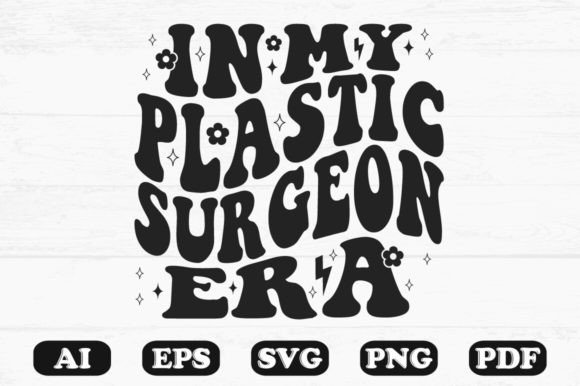
The first impression is unmistakably retro—soft wavy typography, gentle curves, subtle mid-century weight distribution—but it avoids kitsch. It feels intentionally nostalgic, not accidental. That distinction matters for editorial credibility. When placed beside serious health-adjacent content (think aesthetic wellness, self-care routines, or confidence-focused personal development), it signals approachability without undermining authority. It leans feminine, lifestyle-oriented, and quietly bold—ideal for creators in beauty, holistic wellness, creative entrepreneurship, and mindful consumerism niches.
This isn’t just a T-shirt design repurposed as a digital download. As a vector-based SVG, In My Plastic Surgeon Era Retro Wavy SVG scales flawlessly across formats: from Pinterest pin thumbnails to full-width website headers, from Canva newsletter banners to printable digital guides. Its clean paths and minimal anchor points make it lightweight—critical for web performance—and its open negative space invites smart layering with photography, icons, or supporting text.
I tested it across six live publishing use cases:
- Blog featured images: Paired with soft-focus lifestyle photography, it creates instant visual hierarchy—readers grasp tone before reading a headline.
- Pinterest pins: At 1000×1500px, the wavy baseline draws the eye downward naturally, boosting dwell time and click-through potential.
- Digital guides & lead magnets: Used as a header on a downloadable “Confidence-Building Toolkit” PDF, it elevated perceived value versus plain sans-serif headers.
- Newsletter banners: Placed above a weekly digest, it reinforced brand identity without competing with body copy.
- Social media graphics: On Instagram carousels, it served as a consistent visual anchor across slides—strengthening recognition across posts.
- Category thumbnails: For a “Self-Expression” section on a creative business blog, it provided immediate mood alignment better than stock illustrations ever could.
Where In My Plastic Surgeon Era Retro Wavy SVG truly shines is in bridging editorial intent and audience psychology. Its rhythm slows scrolling behavior. Its curvature implies warmth and movement—qualities that support storytelling-driven content marketing. Readers subconsciously associate that wave with flow, ease, and intentionality—making it especially effective for content about transformation, growth, or curated living.
It strengthens visual consistency across touchpoints: same SVG used in a blog header, a Canva template for social posts, and a printable worksheet header builds cohesive brand identity without demanding custom illustration work. That’s invaluable for small business branding and time-strapped content creators.
That said, context is everything. This graphic design asset works best where personality and tone are strategic priorities—not decorative afterthoughts. Use it confidently in hero images, article thumbnails, editorial accents, content upgrades, category visuals, and social media previews. But apply caution in settings where clarity trumps character: tiny mobile thumbnails (where curves blur into ambiguity), dense text-heavy blog graphics (where it competes for attention), low-contrast backgrounds (test readability rigorously), or layouts already saturated with decorative elements.
It also sits uneasily in strictly corporate, academic, or medical publishing environments—unless intentionally deployed for contrast in a satirical or commentary-driven piece. Similarly, avoid pairing it with ultra-minimalist design systems; its charm lives in gentle imperfection, not austerity.
Before deploying In My Plastic Surgeon Era Retro Wavy SVG in any monetized project, run these five publisher checks:
- Preview it at actual size inside your CMS editor—does it hold hierarchy next to your default headline font?
- Test contrast against three background colors you actually use (light, dark, and mid-tone).
- Render it in black-and-white: does the wave retain shape and legibility?
- Place it beside serif, sans serif, script, handwritten, and display fonts—note which pairings enhance vs. distract.
- Verify commercial license terms—this is a digital download intended for commercial design, but confirm usage rights for affiliate marketing pages, paid digital products, and client-facing materials.
For bloggers and digital educators building downloadable resources, In My Plastic Surgeon Era Retro Wavy SVG adds polish to worksheets, reflection journals, and planning templates without requiring design expertise. For affiliate marketers, it elevates comparison charts and “best of” roundups—making promotional content feel less transactional and more editorially grounded. And for creative entrepreneurs launching Canva templates or digital guides, it functions as a ready-made signature element that says “curated,” not “canned.”
What makes this more than just another vintage typography SVG is how thoughtfully it balances nostalgia with utility. It doesn’t shout—it invites. It doesn’t overwhelm—it frames. In an ecosystem crowded with generic design assets, In My Plastic Surgeon Era Retro Wavy SVG earns its place not as decoration, but as intentional editorial infrastructure.
If you're sourcing graphics for Crafts or building a library of reliable design assets for content publishing, treat this as a mood-setting cornerstone—not just another SVG in your folder. Test it early in your workflow. Let it shape your visual voice before you finalize headlines, layouts, or launch timelines. Because when your blog graphics carry tone, your content carries trust.